
wedding flowers South Africa
Wedding Flowers in South Africa: How to Plan Flowers That Transform Your Day
Plan wedding flowers in South Africa with this complete guide to bridal bouquets, ceremony flowers, reception styling, seasons, costs and quotations.
Published · 10 min read
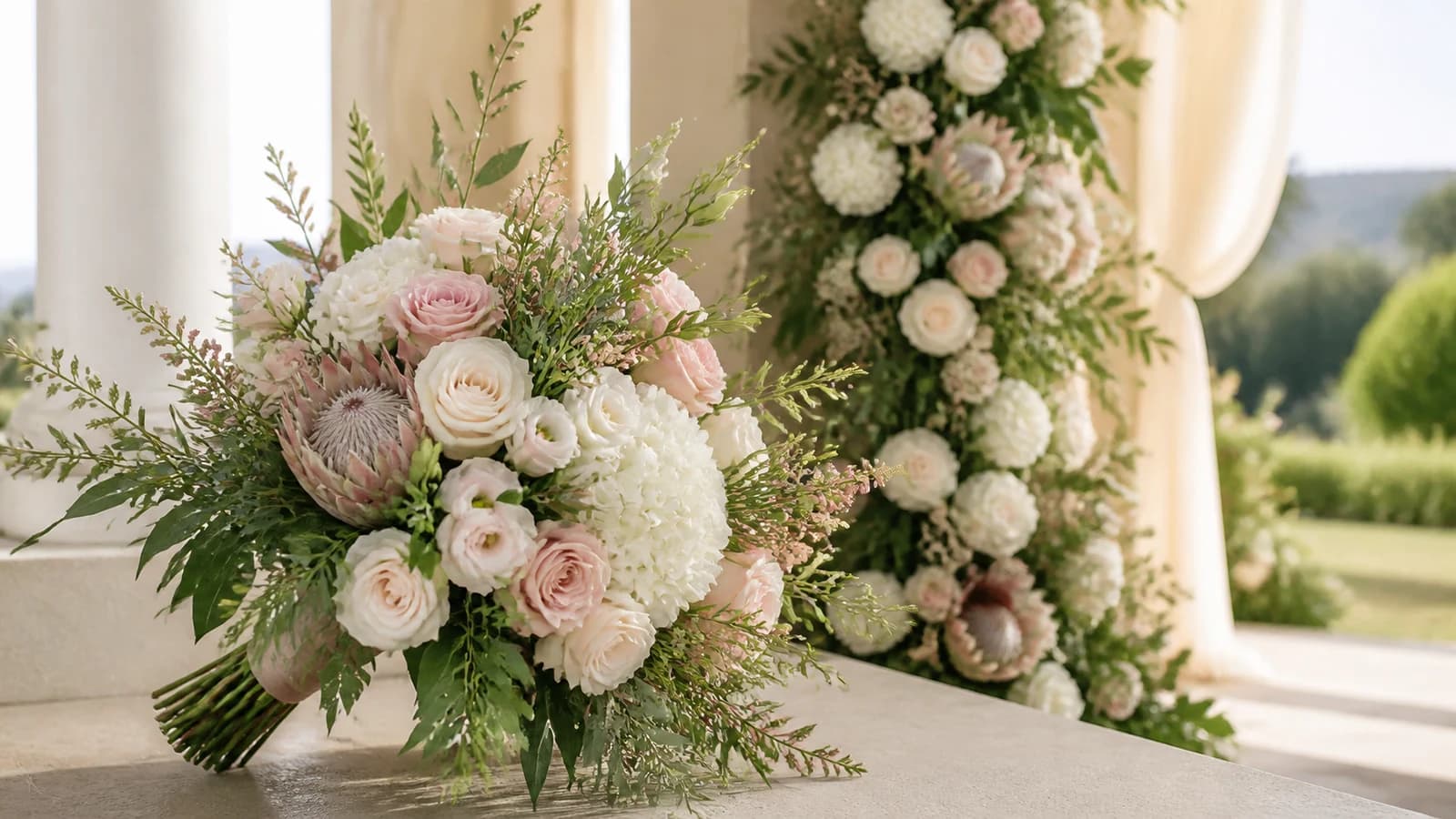
Wedding flowers do far more than decorate a room. They connect the bridal party to the ceremony space, carry your colour palette through the reception and help create the atmosphere guests remember long after the day is over. From a single bridal bouquet to large floral installations, the best wedding flowers feel intentional: they suit the couple, the venue, the season and the scale of the celebration.
If you are planning wedding flowers in South Africa, you also have an unusual advantage. Our local growing conditions give couples access to familiar favourites such as roses, lilies, lisianthus and hydrangeas alongside distinctly South African flowers such as proteas and fynbos. The result can be classic and romantic, modern and sculptural, colourful and expressive, or completely unique to your venue and story.
This guide explains what to include in your wedding flower plan, how to choose a bridal bouquet, which ceremony and reception arrangements make the biggest impact, how South African seasons affect flower choices, and what to discuss with a wedding florist before requesting a quotation.
Start with the feeling you want your wedding to have
Before choosing individual flowers, decide how you want the wedding to feel. A romantic garden wedding may call for loose, layered flowers with movement. A modern hotel celebration may suit cleaner shapes, sculptural arrangements or a restrained colour palette. A bushveld, vineyard or outdoor wedding can look spectacular when the floral design responds to the landscape instead of trying to compete with it.
Useful starting points include your venue, wedding dress, bridesmaid colours, stationery, table linens, lighting and the overall level of formality. Your florist can then translate those elements into flowers, foliage, textures and installations that feel cohesive rather than like separate decorations.
Your wedding flower checklist
A wedding flower quotation becomes much more accurate when you know which areas you would like the florist to style. Most weddings use a combination of personal flowers, ceremony flowers and reception flowers.
Personal flowers
- Bridal bouquet — the main bouquet and usually the strongest expression of the floral style.
- Bridesmaid bouquets — coordinated with the bridal bouquet, often slightly smaller or simpler.
- Buttonholes — small floral details for the groom, groomsmen and other important members of the wedding party.
- Corsages — wrist or pin-on flowers for mothers, grandmothers or other honoured guests.
- Flower girl flowers — petals, a small posy, mini bouquet or floral accessory depending on the age and style of the wedding.
Ceremony flowers
- Wedding arches and floral structures
- Grounded floral installations or ceremony meadows
- Aisle flowers and aisle markers
- Church or altar arrangements
- Entrance arrangements
- Signing table flowers
- Pedestal arrangements and statement pieces
Current South African wedding styling is increasingly focused on purposeful placement rather than flowers everywhere. Grounded installations, sculptural pieces and aisle meadows can frame the key moment of the ceremony without overwhelming a beautiful venue.
Reception flowers
- Table centrepieces or floral runners
- Main or sweetheart table flowers
- Welcome-sign and seating-chart flowers
- Cake flowers
- Bar, lounge and entrance flowers
- Stage or dance-floor flowers
- Hanging installations and overhead florals
- Large feature arrangements for focal areas
One of the most effective ways to stretch the visual impact of a floral budget is to prioritise the spaces guests notice most: the ceremony focal point, the bridal table, guest tables and key photo areas. A skilled wedding florist can also advise where ceremony pieces can safely be repositioned for the reception.
How to choose the right bridal bouquet
The bridal bouquet appears in some of the most photographed moments of the wedding, so it should complement the dress and the bride rather than simply match the table flowers. Consider the silhouette of the dress, the scale of the bouquet, how structured or loose you want it to feel and whether you prefer one dominant flower or a layered mix.
- Classic hand-tied bouquet — rounded or softly gathered and easy to carry.
- Garden-style bouquet — looser, textured and filled with natural movement.
- Cascading bouquet — designed with flowers and foliage that fall below the hand for a dramatic silhouette.
- Monofloral bouquet — built around one flower variety, such as roses, calla lilies, hydrangeas or tulips, for a modern editorial look.
- Sculptural bouquet — uses shape, negative space and architectural flowers to create a contemporary statement.
South African wedding flowers by season
Flower availability changes with weather, growing conditions and market supply, so a seasonal guide should be treated as a starting point rather than a guarantee. Being flexible about exact varieties usually gives your florist more freedom to achieve the best quality, scale and value while preserving the agreed colour palette and overall style.
Summer: December to February
Summer weddings can draw from roses, lisianthus, hydrangeas, sunflowers, zinnias, agapanthus and tuberose, with peonies generally available only for part of the season. This is a strong time for lush garden-style arrangements and abundant colour.
Autumn: March to May
Autumn suits richer colour stories. Roses, dahlias, lilies and leucadendron can work beautifully with burgundy, rust, plum, caramel and soft neutral palettes.
Winter: June to August
Winter is a particularly good time to explore South African fynbos, including proteas, pincushions and conebushes. Stocks, poppies, snapdragons and aloes can add height, movement and structure.
Spring: September to November
Spring offers excellent variety, including proteas, pincushions, blushing brides, ranunculus, anemones, sweet peas and delphiniums, with peonies beginning later in spring. It is ideal for soft romantic palettes as well as more colourful garden-inspired weddings.
Proteas and fynbos: a wedding look that feels unmistakably South African
For couples who want their flowers to feel connected to place, proteas and fynbos are difficult to beat. King proteas can act as sculptural focal flowers, while pincushions, blushing brides, leucadendron, ericas, brunia and other textured stems can create depth and movement.
Indigenous flowers do not have to mean rustic. They can be paired with premium roses, orchids, lilies or refined foliage for a luxury look, or used almost entirely on their own for a modern South African aesthetic. They also work particularly well in large ceremony installations where texture matters as much as individual blooms.
White wedding flowers are still timeless — but colour is becoming more expressive
White and green wedding flowers remain popular because they are elegant, photograph well and suit almost every venue. White roses, orchids, lilies, lisianthus and hydrangeas can create anything from understated minimalism to full luxury.
For couples wanting more personality, current South African wedding styling is also embracing olive, terracotta, chocolate, caramel, burgundy, plum and other earth-led shades, often softened with cream, blush or a restrained accent colour. Colour can be introduced through the flowers themselves, foliage, linens, candles or table details without making the room feel busy.
What affects the cost of wedding flowers?
There is no single useful price for wedding flowers because a bridal-bouquet-only order and a full venue transformation are completely different projects. The biggest cost drivers are usually the number of arrangements, guest and table count, flower varieties, imported or out-of-season stems, size of installations, structures or hired vessels, delivery distance, staffing, setup time and whether the florist must return for breakdown or collection.
Large weddings can require teams of florists working before guests arrive, substantial conditioning and preparation, transport for fragile installations and hours of on-site setup. When comparing quotes, look beyond the number of flower stems and ask exactly what is included in design, delivery, setup, labour, installation, hire items and breakdown.
Planning wedding flowers in Johannesburg or Gauteng
For Johannesburg and Gauteng weddings, venue logistics can affect the floral plan just as much as the flowers themselves. Your florist may need to know when the venue allows access, how far the ceremony and reception spaces are from the unloading point, whether there are stairs or service lifts, what time setup must be complete and whether large structures can be installed on site.
Outdoor ceremonies also need a backup plan for wind, heat or rain. Delicate flowers may need shade and careful timing, while heavier floral structures need to be designed with safety and stability in mind. Sharing the venue name and event schedule early helps the florist quote more accurately.
What to tell your wedding florist before requesting a quote
- Wedding date and venue or venues.
- Approximate guest count and number of reception tables.
- Which personal flowers, ceremony flowers and reception arrangements you need.
- Your colour palette and preferred overall style.
- Any favourite flowers — and any flowers you definitely do not want.
- Whether you are open to seasonal substitutions.
- Inspiration images showing the look and scale you like.
- Your approximate floral budget or investment range.
- Whether you need delivery only, delivery and setup, or complete floral styling.
- Any venue access, timing or installation restrictions you already know about.
The more complete the brief, the easier it is for a florist to recommend the right scale and create a meaningful quotation. Inspiration images are useful, but they work best as a guide to mood, palette and proportions rather than as a request to duplicate another wedding exactly.
Choosing a wedding florist: questions worth asking
- Do you handle both personal flowers and full venue installations?
- Can you work at my wedding venue, and is travel included in the quote?
- Who is responsible for setup and breakdown?
- Are stands, vases, arches and other structures included or hired separately?
- How do you handle seasonal flower substitutions?
- When is the booking confirmed and what deposit is required?
- When are final quantities and table counts due?
- What happens if the venue access time changes?
Wedding flower quotations
Ready to plan your wedding flowers?
Whether you are planning an intimate ceremony, a large Johannesburg wedding, a luxury Gauteng celebration or a full venue floral installation, Rosella Flowers can create a tailored floral plan around your venue, style, colour palette and event requirements.
Request a wedding flower quoteQuick answers
How far in advance should I book a wedding florist?
For large weddings or events requiring installations, it is wise to enquire as early as possible because popular dates and experienced floral teams can book out. Smaller or simpler weddings may be possible on shorter notice, depending on availability.
Can I request exact flower varieties?
Yes, you can share preferred flowers, but exact availability can change with season and market supply. A good florist will protect the agreed style and colour direction and discuss suitable substitutions if a particular stem is unavailable.
What are the most popular wedding flowers in South Africa?
Roses remain a versatile favourite, while lilies, lisianthus, hydrangeas, orchids and seasonal garden flowers are widely used. Proteas and fynbos are especially distinctive local options and can be styled from natural and rustic to highly luxurious.
Can ceremony flowers be reused at the reception?
Often, yes. Some pedestal arrangements, aisle pieces and other designs can be moved after the ceremony, provided the timing, structure and venue layout make it practical and safe.
Do I need wedding flowers on every table?
Not necessarily. A considered mix of floral centrepieces, candles, bud vases and selected statement arrangements can create more impact than repeating the same large arrangement everywhere.